



Truth really can be stranger than fiction.
First Page - Now launched! All the stories are true, or based on real events. Unlimited reading for $4.99 / month. No downloads. Read on your phone, tablet or computer.
La verdad puede ser más extraña que la ficción.
First Page - ¡Ya está en marcha! Todas las historias son verídicas, o están basadas en hechos reales. Lectura ilimitada por $4.99 / mes. No hay que descargar nada. Lea en su teléfono, tableta u ordenador.

Manna Minutes Podcast: Eye-opening Bible study in less than five minutes! Access all episodes here.
Manna Minutes en español:
Estudio bíblico que nos hace abrir los ojos en menos de cinco minutos! Acceda a todos los episodios aquí.
Manna Minutes Podcast auf Deutsch:
Augenöffnendes Bibelstudium in weniger als fünf Minuten! Alle Episoden finden Sie hier.

Was There A Curse On Helen's Romantic Life?
The Third Man by Angela Sheffield is based on a true story. Read chapter one now!
View Content By Specific Category

¿Qué tiene que ver conmigo? por Teófila Gottfried
Lo que leemos en la Biblia tiene que ver con todos los seres humanos, sean cristianos o judíos, ateos o agnósticos, budistas, musulmanes o adherentes a alguna de las filosofías o nuevas religiones que surgen en el mundo. ¿Por qué? Ver mayor información sobre este interesante libro.
Scripture of The Day - St. John 14:6
Jesus saith unto him, I am the way, the truth, and the life: no man cometh unto the Father, but by me.
Escritura del día - San Juan 14,6
Jesús le dijo: Yo soy el camino, y la verdad, y la vida; nadie viene al Padre, sino por mí.
Bibelstelle des Tages - Johannes 14,6
Jesus spricht zu ihm: Ich bin der Weg und die Wahrheit und das Leben; niemand kommt zum Vater, denn durch mich!

Abnormal Respiratory Patterns: Signs and Medical Terms
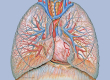
The term "eupnea" is just a fancy word for a normal breathing pattern just as "apnea" is the medical term for the total absence of breathing. Let's take a look at six abnormal respiratory patterns that, depending on the situation, can suggest a threat to life. Those six patterns are: Cheyne-Stokes respirations, Central neurogenic hyperventilation, Biot, Kussmaul respirations, tachypnea, and apneustic.
Cheyne-Stokes Respirations
This is one of the abnormal respiratory patterns that might be indicative of a life-threatening situation, because it can result from an injury to the head. Cheyne-Stokes respirations describe someone who rhythmically breathes rapidly for a period of time and then breathes slowly for a period of time. These abnormal respiratory patterns are accompanied by periods of apnea. Remember that apnea is the total cessation of breathing.
Central Neurogenic Hyperventilation
Another one of the abnormal respiratory patterns that is commonly observed in people who have sustained a head injury is central neurogenic hyperventilation. These respirations are rapid and deep. This is very different from eupnea (normal breathing).
Biot Respirations
Biot respirations, also known as "ataxic" are characterized by breathing that is rapid, but irregular. There is no rhythm or "pace" in this type of abnormal breathing, which also includes periods when the person is apneic (not breathing at all).
Kussmaul Respirations
This is probably one of the easiest to remember of the abnormal respiratory patterns, because it might be observed in diabetic emergencies. Like ataxic respirations, Kussmaul respirations are rapid and irregular. However, a fruity smell is noted on the person's breath. That fruity smell is also called an acetone odor.
Tachypnea
Tachypnea is simply rapid breathing. If someone has been exercising or is excited, of course they might experience tachypnea. That does not necessarily mean that there is anything medically wrong with them. However, tachypnea that occurs with an injury could be a sign of the early stages of shock.
Apneustic Respirations
The last of the abnormal respiratory patterns at which we'll briefly look is known as apneustic respirations. This is breathing characterized by prolonged effort to inhale. A threat to life should be suspected and medical help should be summoned.
Technically, there is a difference between the terms "respirations" and "ventilations." However, they are almost always incorrectly used interchangeably even by health care providers. Respiration refers to the exchange of gases (oxygen and carbon dioxide) from/to fresh air. "Ventilation" refers simply to the movement into and out of the lungs whether gas exchange (respiration) is taking place normally or not.
Related Reading:
From Basic to Advanced Emergency Medical Technician
How an EMT Uses OPQRST for Medical Patient Assessment
 Based on true events, The Third Man by Angela Sheffield, brings the Bible up close and personal as the characters face real issues of life: Betrayal, deceit, romance, bitterness, anger against God, hopelessness, will power, perplexity, triumph, unforgiveness, mental illness, and the "Alcohol made me do it" excuse. Read chapter one FREE now.
Copyright notice: This website and its content is copyright of © Heavenly Manna (HeavenlyManna.net) 2002-2025.
Comments/Comentarios:
Send Comments or a Private Message about One of Our Services / Envíe Comentarios o un Mensaje Privado acerca de nuestros servicios
Once comments reach 10, they close. IF YOU USE PROFANITY, WE WILL REJECT YOUR COMMENT AUTOMATICALLY.
We're a small team, please be patient as we review comments.
©2003 - 2013 Heavenly Manna Ministries
Images: courtesy of Free Digital Photos, openstockphotography.org, FreeFoto.com, Wikimedia Commons. Multiple crosses image - Wikimedia Commons - C.G.P Grey - Animation by Heavenly Manna